
 ADAS Mobile Plus
 ADAS HD
 Radar 3-in-1
 ADAS Pro Plus
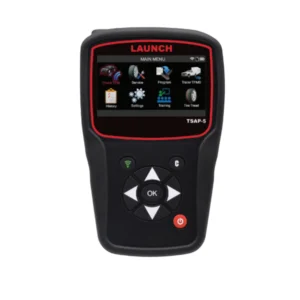 tsap-5
 TSAP-3
 Launch TPMS Sensor
 TTH-84 EV Tool Cart
 Diagnostic Add On Kit
 Modularized Wireless Equalizer – EVB 624
 EV Battery Airtightness Tester – EVT511
 EV Battery Pack Module Charging & Discharging Equipment – EVP711
 Intelligent Digital Power Supply – ELA400
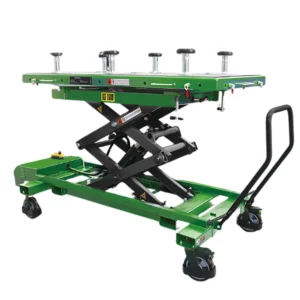 EV Battery Pack Lift – TLT615A
 EV Tool Cart – TTH116
 Professional Insulation Tester – ES200
 EV Clamp – EG100
Automotive Specialty Tools for Wheel Alignment and Balancing
Wheel alignment and balancing are two different services, but both play an important role in keeping a vehicle safe and comfortable to drive. Alignment checks the position of the wheels and suspension angles, while balancing corrects uneven weight around the wheel and tire assembly. When either one is off, drivers may notice uneven tire wear, steering problems, vibration, or poor handling.
For repair shops, having the right equipment makes these inspections easier and helps technicians make accurate decisions. Launch Tech USA offers wheel service equipment designed for alignment and tire inspection, including the X-613 Advanced Wheel Aligner, X-881 Pro, Tread Master, and Tread Master 2.0. These tools cover important parts of wheel and tire service without treating alignment and balancing as the same job.
Why Wheel Alignment Matters
A vehicle’s wheels need to sit at the correct angles for proper handling and tire contact. A change in these angles can happen after hitting a pothole, curb, or other road hazard. Suspension work can also affect alignment.
A technician may check measurements such as camber, caster, and toe to see whether the wheels are within the required range. An alignment system gives the shop measurable results instead of relying only on how the vehicle feels during a road test.
The Launch X-613 Advanced Wheel Aligner is designed for four-wheel alignment. It uses wireless measuring units and clamp targets and does not require permanent installation, wiring, or calibration. These automotive specialty tools measure camber, caster, toe, kingpin inclination, thrust angle, track width, wheelbase, and other alignment information.
X-613 Advanced Wheel Aligner
The X-613 is built for shops that want a compact alignment system without the setup associated with a traditional fixed aligner. Its two wireless measuring units communicate with the system, while the wheel clamp targets are attached to the vehicle.
Launch Tech lists both three-point tire clamps and four-point wheel clamps with the system. The X-613 can also connect with the X-431 Throttle V tablet, giving technicians a way to work with alignment data through a Launch diagnostic platform. Results can be shared through QR code, email, or Wi-Fi printing.
The system supports tire diameters from 470 to 1100 mm with the three-point clamp and wheel diameters from 275 to 640 mm with the four-point clamp. Its measurement ranges include ±10° for camber and ±20° for caster and toe. These specifications make it suitable for a broad range of alignment work when used within the stated limits.
X-881 Pro for 3D Alignment
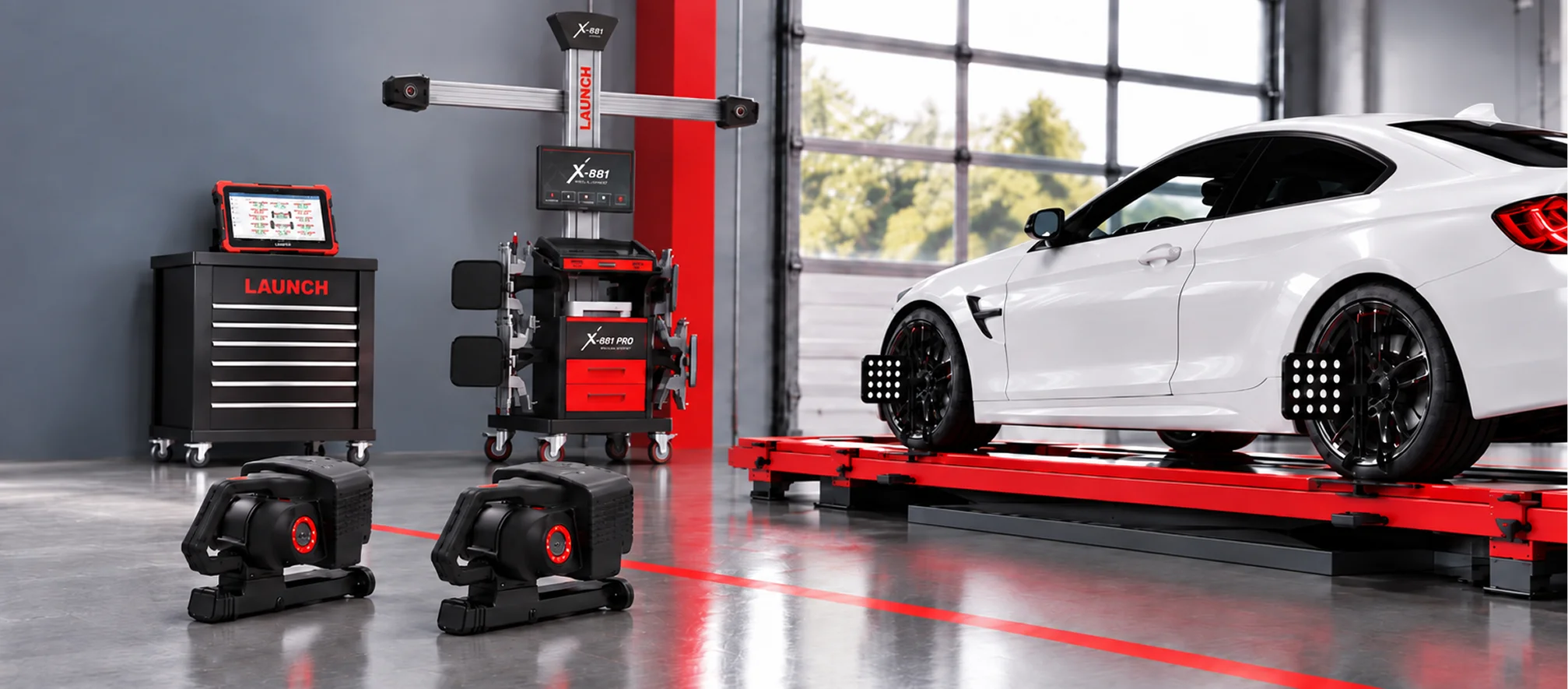
For shops that need a more complete 3D alignment setup, Launch Tech also offers the X-881 Pro. It uses cameras and automatic target tracking to measure wheel alignment without fixed installation.
The X-881 Pro includes a 32-inch color monitor, camera beams, four targets, wheel and tire clamps, a steering wheel holder, and a brake pedal depressor. It also includes a wireless VIN scanning setup and can compensate for uneven floors up to 30 degrees, according to Launch Tech’s product information.
The system measures important alignment parameters such as SAI, wheelbase setback, and track data. It also provides less than one-foot run-out compensation and includes two years of software updates and remote support.
Checking Tire Wear Before and After Service
Alignment work should not be separated from tire inspection. Uneven tread wear can provide useful information about a vehicle’s condition and may point technicians toward an alignment or tire-related issue.
The Launch Tech Tread Master is a handheld laser tire gauge designed to measure tread across the full tire in one pass. It provides 1/32-inch accuracy and can measure groove count and depth. It can also create inspection reports with maintenance suggestions and share reports through a QR code.
The Tread Master 2.0 uses the same laser scanning technology as the original Tread Master, with 1/32-inch accuracy and the ability to scan the full tread or a single groove. Both models generate inspection reports that include wear analysis, estimated braking distance, and service recommendations such as rotation, replacement, and alignment. The main upgrade in the 2.0 is a larger 3.97-inch touchscreen, compared to the 1.7-inch screen on the original Tread Master, along with the ability to add photos directly to inspection reports.
What About Wheel Balancing?
Wheel balancing is different from wheel alignment. Balancing focuses on the distribution of weight around the tire and wheel assembly. When a wheel and tire are not balanced correctly, the vehicle may develop vibration, especially as speed increases.
A wheel balancer is normally used to measure the imbalance and identify where corrective weights should be placed. Launch Tech USA’s current wheel service category lists the X-613 Advanced Wheel Aligner, X-881 Pro, Tread Master, and Tread Master 2.0. It does not currently list a dedicated wheel balancing machine in that category.
This distinction matters when choosing equipment for a shop. An alignment system should not be presented as a wheel balancer, and a tire tread inspection tool does not replace either service. Each tool has a specific job.
Choosing the Right Equipment
The right equipment depends on the type of wheel service a shop performs. The X-613 is a practical choice for shops looking for a compact, portable 3D alignment system. The X-881 Pro is designed for shops that want a larger 3D alignment setup with cameras, a monitor, VIN scanning, and reporting features.
For tire inspections, the Tread Master and Tread Master 2.0 perform the same core scanning and reporting functions. The real difference comes down to the display and photo capability, with the Tread Master 2.0’s larger touchscreen and photo feature making it easier to build out a detailed inspection report on the spot.
For technicians, using the correct equipment for each job helps create a clearer picture of the vehicle’s condition. Alignment measurements show wheel-angle problems, while tread inspection shows how the tires are wearing. If balancing is required, a dedicated balancing machine should be used for that service.
With the right combination of wheel alignment and tire inspection equipment, shops can perform more complete wheel service and give customers clearer information about the condition of their vehicle.