Author: user

  • Universal vs Manufacturer-Specific Scan Tools

    Universal vs Manufacturer-Specific Scan Tools

    Universal vs Manufacturer-Specific Scan Tools

    Every technician knows that a diagnostic tool is the most important teammate in the garage. Whether you run a high-volume independent shop in the USA or specialize in high-end European imports, you have likely asked yourself a big question. Should I invest in a universal scan tool or stick with manufacturer-specific equipment?

    At Launch Tech USA, we have spent decades developing the technology that sits in the hands of mechanics across the country. We understand that this isn’t just about buying a new gadget. It is about your shop’s efficiency, your profit margins, and your ability to say yes to every customer who walks through the door.

    This guide breaks down the differences between these two types of tools and shows you why the right choice can transform your daily workflow.

    Understanding the Basics

    Before we dive into the comparison, we should define exactly what we are talking about.

    What is a Manufacturer-Specific Scan Tool (OEM)?

    A manufacturer-specific tool, often called an OEM tool, is built for one specific brand. If you work exclusively on Fords, you use a Ford-specific tool. It offers deep access to that brand’s proprietary systems. This allows for complex coding and programming that generic tools sometimes miss.

    What is a Universal Scan Tool?

    A universal scan tool is engineered to communicate with many different makes and models. However, universal does not mean basic. Professional-grade universal tools, like ourprofessional diagnostic tools, are built to provide deep levels of access across hundreds of different brands.

    Universal vs. Manufacturer-Specific: The Head-to-Head Comparison

    To help you decide which direction to take, let’s look at how these tools perform in real-world shop environments.

    1. Coverage and Versatility

    If a customer brings in a Chevy in the morning and a BMW in the afternoon, a manufacturer-specific tool forces you to switch equipment. Even worse, you might have to turn the job away.

    A high-end universal tool is the most versatile piece of equipment in the garage. For shops in the USA that see a massive variety of domestic, Asian, and European vehicles, having one tool that handles all of them is a massive advantage. You save time because you don’t have to learn five different interfaces.

    2. Depth of Diagnostics

    In the past, OEM tools held the crown for deep-level programming. However, that gap is closing fast. Modern professional tools from Launch Tech USA now offer bi-directional controls, ECU coding, and resets that used to be exclusive to dealership tools. While an OEM tool is very deep for one brand, a professional universal tool is deep across almost every brand on the road.

    3. Cost and ROI (Return on Investment)

    Buying an OEM tool for every brand you service is financially impossible for most independent shops. Each one requires its own hardware, software licenses, and expensive annual updates.

    A universal tool offers a much higher return on your investment. You pay for one device and one software subscription. This covers the vast majority of the vehicles on the road. For most USA shop owners, this is the most logical path to making more money.

    4. Speed and Ease of Use

    OEM tools can be notoriously clunky and slow to boot up. They are designed for dealership environments where time is billed differently. In a fast-paced independent shop, you need a tool that boots up in seconds. You need to scan all modules quickly and get a clear report you can show the customer. Universal tools are built for this exact speed.

    Why Launch Tech USA Bridges the Gap

    At Launch Tech, we don’t think you should have to choose between versatility and power. Our professional tools are designed to give you the best of both worlds.

    We develop our software by working closely with vehicle data. We ensure that when you plug in a Launch tool, you aren’t just getting generic codes. You are getting deep-system access, live data graphing, and the ability to perform complex functions like brake bleeding, DPF regens, and key programming.

    We focus on the needs of the modern technician. We know you need a rugged tool that survives a drop on a concrete floor. You also need software that stays updated with the latest 2024 and 2025 vehicle models.

    Common Questions from Technicians 

    Can a universal tool really do everything an OEM tool can? 

    For about 95% of daily repair tasks, the answer is yes. While some very specific, high-level ECU flashing might still require an OEM interface, a professional Launch tool handles the coding, adaptations, and diagnostics that make up the bulk of your revenue.

    Are universal tools hard to update? 

    Not anymore. Gone are the days of plugging into a PC. Our tools update via Wi-Fi with one click. This ensures you always have the latest USA vehicle coverage.

    Which is better for a mobile mechanic? 

    A universal tool is the only choice for a mobile mechanic. You cannot haul ten different laptops and modules to a roadside job. You need one reliable tablet that covers everything.

    Which One Should You Choose?

    Choose a Manufacturer-Specific Tool if

    • You only work on one brand, like a dedicated Porsche or VW shop.
    • You perform high-level module programming that requires a direct factory link every single day.

    Choose a Professional Universal Tool if

    • You run an independent shop and want to service any car that pulls into your bay.
    • You want to maximize your budget without sacrificing diagnostic power.
    • You need a fast, user-friendly interface that helps you fix cars quicker.

    Elevate Your Shop’s Potential

    The choice between universal and manufacturer-specific tools comes down to how you want to run your business. If you want the freedom to work on a Ford, a Toyota, and a Mercedes all with the same device, then a universal tool is your winner.

    At Launch Tech USA, we pride ourselves on providing the highest standard in universal diagnostics. We don’t just give you a code reader. We give you a complete diagnostic workstation.

    Ready to upgrade your shop’s capabilities? Explore our full range of Professional Diagnostic Tools and see why thousands of technicians across the USA trust Launch Tech to get the job done right the first time.

    Don’t let your tools limit your talent. Choose the power of versatility.
  • Heavy-Duty vs Passenger Car Diagnostic Tools

    Heavy-Duty vs Passenger Car Diagnostic Tools

    Heavy-Duty vs Passenger Car Diagnostic Tools

    The complexity of a vehicle is no longer defined just by its size, but by the sophisticated computer networks running beneath the hood. Whether you are managing a fleet of long-haul freight trucks or operating a local repair shop for sedans and SUVs, having the right diagnostic equipment is the difference between a quick fix and hours of guesswork.

    At Launch Tech USA, we understand that technicians across the USA require precision instruments tailored to their specific market. While both heavy-duty and passenger car scanners serve the same fundamental purpose, communicating with a vehicle’s Electronic Control Units, the technology, protocols, and hardware required for each are worlds apart.

    Understanding these differences is essential for any shop owner looking to invest in professional diagnostic tools. This guide explores the critical distinctions between heavy-duty and passenger car diagnostics and why choosing the right tool from Launch Tech is a game-changer for your business.

    The Core Difference is the Language the Vehicle Speaks

    The most significant difference between a standard passenger car scanner and a heavy-duty tool is the protocol they use to communicate.

    For passenger cars in the USA, the standard is OBD-II. Since 1996, almost every car sold in the USA uses this 16-pin connector and follows similar communication protocols. This makes it relatively easy for a single professional tool to cover a wide variety of brands like Ford, Chevrolet, Toyota, and BMW.

    Heavy-duty vehicles operate on entirely different standards. Instead of OBD-II, trucks, buses, and construction equipment typically use J1939 or J1708 protocols. These systems are designed to handle the massive amounts of data generated by industrial engines, complex air brake systems, and multi-axle configurations. A general-purpose passenger car scanner simply cannot talk to these systems. This is why Launch Tech develops specialized software and hardware interfaces specifically for the heavy-duty sector.

    Hardware Built for the Toughest Jobs

    When you look at the Launch Tech USA lineup, you will notice that heavy-duty tools are built with a different level of ruggedness.

    • Different Connectors: While passenger cars use the universal 16-pin plug, heavy-duty vehicles often use 6-pin or 9-pin Deutsch connectors. Professional-grade kits from Launch Tech often include a variety of adapters to ensure you can connect to everything from a Freightliner to a Caterpillar engine.
    • Voltage Requirements: Passenger cars operate on 12V systems. Heavy-duty trucks often utilize 24V systems. If you try to use a cheap, standard car scanner on a 24V truck system, you risk damaging the tool. Launch Tech professional tools are engineered to handle these higher voltage demands safely.


    How Diagnostic Capabilities Vary by Vehicle Type

    While passenger car diagnostics focus on driver comfort and safety systems, heavy-duty diagnostics prioritize industrial performance and emissions compliance to keep commercial fleets on the road. The specialized software required for each vehicle class ensures that technicians can access the specific deep-level data needed for a successful repair.

    Passenger Car Diagnostics

    For the average sedan or light-duty pickup, a professional tool focuses on systems like the engine, transmission, ABS, and Airbags. Modern cars also require special functions such as oil resets, electronic parking brake retraction, and steering angle sensor calibration. Launch Tech USA provides industry-leading coverage for these consumer-facing features, allowing shops to turn over cars quickly.

    Heavy-Duty Diagnostics

    In the world of heavy-duty trucking, the stakes are higher. A truck sitting in a shop is a truck that isn’t making money. Diagnostic tools for this segment must go much deeper into the functional side of the vehicle:

    • DPF Regeneration: Forced diesel particulate filter regens are a daily necessity for diesel technicians.
    • AdBlue and DEF Testing: Monitoring the emissions fluid systems to prevent limp mode.
    • Cylinder Cut-out Tests: Essential for identifying which specific injector or cylinder is misfiring in a massive engine.
    • Transmission Adaptation: Calibrating complex automated manual transmissions common in modern heavy-duty fleets.


    Why a Generic Approach Fails Professional Technicians

    Many shop owners ask if they can just buy one tool for everything. While Launch Tech offers versatile tablets that can be expanded with heavy-duty modules, the software architecture remains distinct. Using a passenger car tool on a heavy-duty vehicle, even with an adapter, is like trying to read a technical manual in a language you only half-understand. You might see a code, but you won’t get the bi-directional control needed to actually fix the problem.

    By investing in dedicated professional tools from Launch Tech USA, you ensure that your technicians have the specific bi-directional tests and wiring diagrams required for the vehicle class they are working on.

    The Role of Launch Tech in the USA Repair Industry

    Launch Tech has established itself as a cornerstone of the USA automotive repair industry. We do not just sell tools; we provide solutions that are tested in real-world American shops. Our software updates are frequent, ensuring that when a new model hits the road in the USA, your shop is ready to service it.

    Our commitment to the USA market means our interface is intuitive, our technical support is local, and our hardware is designed to survive the grease and drops of a busy American garage.

    Real User Query Regarding Tool Compatibility

    We often hear from technicians who are frustrated that their high-end car scanner will not pull codes from a semi-truck. The answer lies in the Gateway and Protocol.

    A Class 8 truck does not just have a different plug; it sends data at different speeds and via different pathways than a Ford F-150. Furthermore, heavy-duty vehicles are often modular. The engine might be made by Cummins, the transmission by Eaton, and the brakes by Bendix. A passenger car tool expects one manufacturer to control everything, whereas a Launch Tech heavy-duty tool is programmed to talk to each of these individual component manufacturers separately.

    Common Questions About Vehicle Diagnostics


    Can I use a Launch Tech car tool on a heavy truck with an adapter?

    No, not effectively. While an adapter might allow the tool to physically plug into the port, the software protocols are different. To scan heavy-duty vehicles, you need a Launch Tech tool specifically equipped with heavy-duty software and the appropriate communication interface.

    Is Light-Duty the same as Passenger Car?

    In the USA, light-duty usually refers to Class 1-3 vehicles like cars, SUVs, and smaller pickup trucks. Heavy-duty refers to Class 7-8 semi-trucks. There is also a Medium-Duty category which often requires the specialized software found in Launch Tech professional heavy-duty kits.

    Why are heavy-duty diagnostic tools more expensive?

    The cost reflects the complexity of the software. Heavy-duty tools must cover dozens of different engine, transmission, and braking manufacturers, each with proprietary codes. Launch Tech USA invests heavily in engineering to ensure these tools can perform high-level tasks like injector coding and DPF resets.

    Do I need an internet connection to use my Launch Tech tool?

    For the initial download of software and for updates, yes. However, most diagnostic functions on Launch Tech professional tools can be performed offline, which is vital for technicians working in remote areas or large fleet yards across the USA.

    Does Launch Tech USA offer support for its tools?

    Yes. Launch Tech USA provides dedicated support for our customers. When you purchase a genuine professional tool, you get the peace of mind that comes with a USA-based warranty and technical assistance.

    Conclusion 

    Choosing between heavy-duty and passenger car diagnostic tools comes down to your business model. If you want to be a versatile shop that never turns a customer away, exploring the professional tools category at Launch Tech USA is the first step.

    By equipping your team with the right Launch Tech gear, you are not just buying a scanner you are buying the ability to diagnose accurately, repair faster, and keep the wheels of the USA moving. Do not let a protocol mismatch stand in the way of your shop’s success. Choose Launch Tech USA for precision, durability, and industry-leading vehicle coverage.

  • Diagnostic Scan Tools Compatible with Most Car Brands

    Diagnostic Scan Tools Compatible with Most Car Brands

    Diagnostic Scan Tools Compatible with Most Car Brands

    Fixing a car used to be about listening for a rattle or looking for a leak. Today, cars are high-tech machines with dozens of computers hidden under the hood and inside the cabin. When a Check Engine light or a Service ABS warning pops up, it is the car’s way of asking for help in a language that requires a special translator.

    For repair shops and car enthusiasts in the USA, having a separate tool for every brand like Ford, Toyota, or BMW is simply not practical. You need Diagnostic Scan Tools Compatible with Most Car Brands. At Launch Tech USA, we design these universal tools to help you diagnose, repair, and maintain almost any vehicle that rolls into your shop.

    What is a Multi-Brand Diagnostic Scan Tool?

    A diagnostic scan tool is a device that connects to your car’s On-Board Diagnostics (OBD-II) port. Every car sold in the USA after 1996 has this port, usually found under the steering wheel. While basic readers only tell you why the engine light is on, a professional multi-brand tool talks to every system in the car from the transmission and brakes to the airbags and air conditioning.

    The Multi-Brand part is the most important. It means the tool has software inside it for hundreds of different car makes from America, Asia, and Europe. Instead of buying ten different scanners, one Launch Tech tool can handle almost everything.

    Why Compatibility Matters for Your Shop

    If you run a business, time is money. If you have to tell a customer, I cannot fix your car because I do not have the right scanner, they will go to your competitor. Using tools compatible with most car brands allows you to say Yes to every job.

    1. Save Money on Equipment

    Buying dealer-only tools for every brand is expensive. A single professional tool from Launch Tech USA provides nearly the same power for a fraction of the cost. It covers the 98% of vehicles you see every day on American roads.

    2. Speed Up Your Work

    When a tool is compatible with most brands, the menus and buttons stay the same. You do not have to learn a new system every time a different car brand enters the bay. This consistency helps you find the problem and fix it faster.

    3. Build Trust with Customers

    Modern scan tools can create digital health reports. You can print these out or email them to your customer in the USA. When they see a professional report showing exactly what is wrong, they are more likely to approve the repair.

    Key Features of Professional Launch Tech Tools

    Not all scan tools are the same. If you are looking for real power, you should explore ourprofessional tools category. These tools offer features that go far beyond simple code reading.

    Full System Diagnostics

    A basic tool might only check the engine. A Launch Tech professional tool checks the ABS (brakes), SRS (airbags), SAS (steering), TPMS (tires), and even the radio and seats. If a computer controls it, our tool can talk to it.

    Bi-Directional Control (Active Tests)

    This is a must-have for any real mechanic. Bi-directional control means the tool can send commands to the car. For example, if you think a cooling fan is broken, you can use the tool to tell the car to turn the fan on. If the fan spins, you know the fan is good and the problem is in the wiring or a sensor. This active testing eliminates guesswork.

    ECU Coding and Programming

    When you replace a part like a new window motor or a headlight module, the car’s main computer often does not recognize it. You need to code the part so it works with the rest of the car. Launch Tech tools provide this advanced power for most major car brands.

    Service Resets

    Every modern car needs a reset after basic maintenance. Whether it is an oil life reset, brake bleeding, or battery registration, our tools have dedicated Hot Keys to do these jobs in seconds.

    Popular Launch Tech USA Models for Professional Use

    We offer a range of tablets designed for different shop sizes. Here are a few examples of what you might find in our lineup:

    • The X-431 Throttle V: Our most powerful tool. It features a large screen, fast software, and the ability to handle complex jobs like ADAS calibration and heavy-duty truck diagnostics.
    • The Torque Link: A great balance of power and price. It is built for the busy technician who needs to move from car to car quickly and needs deep access to every system.
    • The Turbo III: Perfect for general repair and high-volume shops that need a reliable, rugged tool for daily maintenance and diagnostics.


    Why Launch Tech USA is the Right Choice

    The automotive world in the USA is unique. We have specific trucks and SUVs that are not common in other parts of the world. Because we are based in the USA, we make sure our software is optimized for the vehicles you actually see in your shop every day.

    Regular Software Updates

    Car manufacturers release new models every year. We release software updates constantly to make sure your tool stays compatible with the newest 2024 and 2025 models. Most of our tools allow you to update with just one click over Wi-Fi.

    Rugged and Reliable

    A repair shop is a tough place. Tools get dropped, covered in grease, and bumped into. We build our tablets with protective cases and high-quality screens that can handle the real world of an American garage.

    Tips for Getting the Most from Your Scan Tool

    1. Use the Topology Map: Many Launch tools show a map of the car’s computers. This helps you see how they are connected and which one is causing a communication error.
    2. Save Your Data: Use the Data Logging feature. If a car has a weird problem that only happens while driving, you can record the data and look at it later in the shop.
    3. Check for Updates Weekly: New car data is added all the time. Taking five minutes on a Monday morning to update your tool ensures you are never stuck on a new model.


    Common Myths About Universal Scan Tools

    Myth: Universal tools are not as good as dealership tools. 

    Reality: While dealerships have highly specialized tools, modern Launch Tech USA equipment provides OE-level access. This means you can do almost everything the dealer can do, including coding and adaptations.

    Myth: They are too hard to use. 

    Reality: We use simple Android-based screens. If you can use a smartphone, you can use a Launch Tech scan tool. The menus are clear, and the icons are easy to understand.

    Conclusion

    The secret to a successful repair shop in the USA today is having the right information. You cannot fix what you cannot see. By using Diagnostic Scan Tools Compatible with Most Car Brands, you open the door to fixing almost any vehicle with confidence and precision.

    At Launch Tech USA, we are dedicated to providing you with the best technology at a fair price. Our tools reduce the time you spend guessing and increase the time you spend fixing. This leads to happier customers, more referrals, and a more profitable business. Don’t let a mystery warning light slow you down. Get the tool that speaks every car’s language.

    Level up your shop with Launch Tech USA today.

  • Advanced Diagnostics: ECU, ABS, SRS Explained

    Advanced Diagnostics: ECU, ABS, SRS Explained

    Advanced Diagnostics: ECU, ABS, SRS Explained

    Modern auto repair requires more than just a set of wrenches. Today’s cars and trucks are essentially computers on wheels. To fix them properly, a technician must speak their digital language. Professional mechanics and shop owners across the USA know that the most profitable repair jobs often involve complex electronic systems. Specifically, the Engine Control Unit (ECU), the Anti-lock Braking System (ABS), and the Supplemental Restraint System (SRS) are the three pillars of vehicle safety and performance.

    Launch Tech USA provides the professional-grade diagnostic tools required to navigate these intricate systems. These tools do much more than just read basic codes; they provide a deep window into the brain of the vehicle. If you want to decrease diagnostic time and increase shop efficiency, understanding how to use a Launch Tech scanner for ECU, ABS, and SRS systems is essential for your business.

    The Engine Control Unit (ECU): The Brain of the Vehicle

    The ECU is the most critical component in a modern engine. It manages everything from the fuel injection and ignition timing to the emissions control. When a customer walks into a shop in the USA with a check engine light, they expect a fast and accurate answer.

    Comprehensive ECU Analysis

    Using a Launch Tech professional tool, such as the X-431 series, allows a technician to perform a deep dive into the ECU data. While a basic scanner might give a generic code, these professional tools offer a live data stream. This means a mechanic can watch how the engine performs in real-time. You can monitor the fuel trims, the oxygen sensor voltages, and the cylinder misfires as they happen.

    Professional Use Case: Identifying Ghost Problems

    Sometimes a vehicle has a driveability issue but no active trouble code. This is where professional diagnostics prove their value. A technician can use the graphing functions on a Launch Tech tool to overlay different data sets. By comparing the throttle position sensor data with the mass airflow sensor data, you can spot hesitations that a cheap code reader would miss. This level of detail ensures you fix the car right the first time, protecting the reputation of the shop.

    ABS Diagnostics: Ensuring Stopping Power

    The Anti-lock Braking System is vital for the safety of the driver. It prevents the wheels from locking up during hard braking, allowing the driver to maintain steering control. When the ABS light stays on, the system is usually disabled, leaving the driver at risk on the road.

    Beyond Basic Sensor Checks

    Many entry-level tools only tell you if a wheel speed sensor is bad. The professional tools from Launch Tech USA go much further. These scanners allow for bi-directional control. This is a massive advantage for a professional shop.

    For example, if you suspect a faulty ABS pump or a stuck solenoid, you do not have to take the whole system apart to test it. You can use the Launch Tech scanner to manually command the ABS pump to turn on or cycle the valves. If the component responds to the command from the scanner, you know the wiring and the component are good, and the problem lies elsewhere in the circuit.

    Professional Use Case: ABS Bleeding

    Replacing an ABS module or a brake master cylinder often introduces air into the internal valves of the ABS unit. Traditional gravity bleeding or pumping the pedal cannot get this air out. You need a professional tool to perform an automated ABS bleed. Launch Tech tools guide a technician through this process step-by-step, cycling the internal pumps to purge all the air.

    This service is a high-value task that requires professional equipment.

    SRS Diagnostics: The Safety Net

    The SRS, commonly known as the airbag system, is the most sensitive system in a vehicle. It includes the airbags, the crash sensors, the seatbelt pretensioners, and the main control module. Because this system involves explosives and life-saving equipment, there is no room for mistakes.

    Precise Fault Location

    An SRS light can be triggered by a loose wire under a seat or a complex failure in an impact sensor. Launch Tech professional diagnostic tools provide specific descriptions for the SRS codes. Instead of a vague airbag fault, these tools point the technician directly to the driver-side curtain airbag squib circuit or the passenger seat occupancy sensor.

    Professional Use Case: System Resets After Repair

    When a vehicle is involved in a minor collision where the airbags do not deploy, the SRS module may still record crash data or “hard codes” that stay locked in the computer. After the mechanical repairs are finished, a technician must use a professional scanner to clear these codes and ensure the system is active. Using Launch Tech USA tools ensures that the SRS system is reset according to the manufacturer’s specifications, giving the customer total peace of mind.

    Why Launch Tech USA is the Choice for Pros

    There are many scanners on the market in the USA, but professional shops choose Launch Tech for specific reasons. These tools are built for heavy daily use in a fast-paced garage environment.

    • Wide Vehicle Coverage: Launch Tech tools support thousands of models from domestic, Asian, and European manufacturers. Whether you are working on a new luxury SUV or an older work truck, the software provides deep system access.
    • Bi-Directional Control and Coding: The ability to talk back to the car separates a professional from a hobbyist. When you replace a new ECU or an ABS module, the car often will not recognize the new part until it is coded to the VIN. Launch Tech tools handle these high-level functions easily.
    • Remote Diagnostics and Reports: In a modern shop, communication is key. These tools allow you to generate a professional diagnostic report that you can email or text directly to the customer. This builds trust by showing them exactly what is wrong with the vehicle.


    Maximizing Shop Revenue

    Investing in high-quality diagnostic equipment from Launch Tech USA is a direct investment in the bottom line of the business. When you can diagnose ECU, ABS, and SRS issues quickly, you reduce the amount of time a car spends taking up a bay.

    Faster Turnaround Times

    Every minute a technician spends guessing is a minute of lost profit. By using the live data and the active testing features of a Launch Tech scanner, you can find the root cause of the problem in minutes rather than hours. This efficiency allows a shop to take on more customers and finish more jobs every day.

    Expanded Service Offerings

    If a shop currently avoids electronic repairs or airbag work, it is leaving money on the table. With the right Launch Tech tool, these complex systems become manageable. You can offer full-service repairs that include module programming, sensor calibration, and system resets. Being a one-stop shop for all electronic and mechanical needs makes you the expert in your local area.

    The evolution of vehicle technology means that diagnostics are now the heart of the repair industry. Systems like the ECU, ABS, and SRS are complex, but they are not impossible to master. With the professional tools from Launch Tech USA, you have the power to see inside these systems, run advanced tests, and perform critical repairs.

  • Multi-System Car Scan Tools for Workshops

    Multi-System Car Scan Tools for Workshops

    Multi-System Car Scan Tools for Workshops

    In the busy world of auto repair, wasting time is the same as losing cash. Every minute a car sits in your bay without a clear fix is a missed chance to make money. For modern shops across the USA, using a basic code reader just doesn’t work anymore. To stay ahead of the shop down the street, you need professional gear that can talk to every computer inside a vehicle.

    Multi-system car scan tools are the heart of any successful garage. They let your mechanics move past simple engine lights and look deep into the transmission, brakes, airbags, and steering systems. When you pick equipment from Launch Tech USA, you are getting a reliable partner built for the American mechanic.

    If you want the best tools for your business, take a look at the full range of professional diagnostic tools to see how they can make your daily work much faster.

    Give Your Shop The Power To Scan More Than Just Engines

    Most cheap tools only look at the engine light. But as a shop owner, you know the real profit comes from fixing the tricky stuff. Whether it is a light on the dash for the air suspension or a glitch in the traction control, a multi-system tool is your key to getting inside.

    By using a pro tool, you get to see what is happening in the transmission, the anti-lock brakes, the airbags, and the body electronics. This deep access means you never have to tell a customer to go back to the dealership for a special reset. You keep that work and that money in your own shop.

    Quick Testing To Find Broken Parts Fast

    One of the biggest drags on a shop is spending hours taking things apart just to see if they work. With the advanced features found in Launch Tech USA tools, you can skip the manual labor.

    Instead of pulling a door panel off to check a window motor, you can just tell the motor to move up or down right from your screen. You can turn on fuel pumps, click the A/C clutch, or test fuel injectors with one tap. This kind of testing turns hours of poking around into minutes of clicking buttons. It helps you work faster and keeps your shop moving.

    Huge Coverage For All The Cars On American Roads

    On any normal day, a USA workshop might see a big diesel truck, a fancy European car, and a hybrid. You cannot afford to own a tool that only works on a few brands.

    Professional multi-system tools come with massive software libraries. They work with over 100 different car brands. From the newest trucks to older cars, these tools have the software ready to go. Even on newer cars that have locked gateways, these tools help you get in and get the job done.

    Make Your Work Easier With Full Health Checks

    In a professional shop, being clear with your customers is very important. A great feature of a high-end tool is the ability to run a full health report.

    With one button, the tool scans every single computer in the car and finds every hidden fault. After the scan, you can do a few things. You can print the report or email a PDF straight to the customer. This builds a lot of trust because you can show them exactly what is wrong. It also gives you a record of the car before and after you fixed it to prove the job was done right.

    Setup New Parts Without Leaving Your Bay

    Nowadays, you can’t just bolt on a new part and expect it to work. Most parts, like steering sensors or even new batteries, need to be introduced to the car computer. This is called coding or initialization.

    Without a pro tool, a new part might stay turned off even if it is installed perfectly. Launch Tech USA tools give you the power to set up these new parts yourself. This lets your shop handle big jobs like transmission swaps or camera setups that used to be jobs only a dealer could do.

    Tough Tools That Work Without Wires

    A garage floor is a rough place for a tablet. Pro tools need to be built strongly but still run fast. The latest tablets from Launch Tech USA have thick cases and screens that won’t break easily if they get bumped or dropped.

    The best part is that they are wireless. You don’t have to be tied to the dashboard with a short cord. You can stand at the front of the car or have it up on the lift while you look at the data on your tablet from across the shop. This gives your mechanics more room to move and makes the job much less frustrating.

    Keeping Your Tools Current With Easy Updates

    Buying a scan tool is an investment, and you want it to stay useful for a long time. The car world changes fast, and new models come out every year with new computer systems.

    Since Launch Tech USA is a top brand, they put out software updates all the time to keep your tool ready for new cars. You aren’t just buying a tool for today but for the future too. In the USA, where new electric cars and high-tech trucks are everywhere, having a tool that stays updated is the only way to stay in business.

    Why Investing In Better Tools Makes You More Money

    When you look at the math, a pro multi-system tool pays for itself very quickly. You get fewer cars coming back because you found the right problem the first time. You also get to charge for more labor hours because you can do the coding and setups that other shops can’t.

    Plus, the best mechanics want to work at shops that have the best gear. Providing pro tools shows your team that you care about their success and want them to have what they need to do a great job.

    Get Your Workshop Ready For The Future

    Cars are only getting more complicated. To stay open and keep making money, your shop needs to be the smartest one in town. By picking a multi-system tool made for professional use, you are making sure your business is ready for whatever drives through the door.

    Don’t let a simple light on the dashboard stop your progress. Unlock the full potential of your garage and give your customers the best service possible.

    If you are ready to move up to a better way of working, check out our professional diagnostic tools and find the one that fits your shop best.

  • Diagnostic Scan Tools for Mechanics: Features That Matter

    Diagnostic Scan Tools for Mechanics: Features That Matter

    Diagnostic Scan Tools for Mechanics: Features That Matter

    Across the USA, being a mechanic means dealing with cars that are more like computers on wheels than the old-school machines we used to work on. To fix a car right these days, you cannot just rely on your gut feeling or a basic wrench. You need a way to actually talk to the vehicle’s brain. That is exactly where a professional diagnostic scan tool comes in. It is the most important piece of equipment you can have in your shop today.

    At Launch Tech USA, we build our gear for the people who spend their days under the hood. We know that if a tool is too slow or too hard to figure out, it is just getting in your way and costing you money. We focus on making professional tools that pack a ton of power but are still very easy to use. When you pick up one of our devices, you are using the best technology available to get your customers back on the road fast.

    Why Your Shop Needs a Professional Scan Tool

    It was not that long ago that you could handle most jobs with a simple code reader. But those times are gone. Today, even a basic job like putting in a new battery or changing brake pads might need a computer to tell the car that the work is done. If you do not have a high-end tool, you end up sending your customers to the dealership. That means you are handing your profits to someone else.

    By using the right equipment, you keep those jobs and that money in your own bays. These tools give you the same level of power that the big dealerships have. Whether you are working on a local truck or a high-end import, the software is ready for the job. We make sure our equipment can handle the wide mix of cars found all over the country.

    Total System Coverage You Can Count On

    The main thing a mechanic needs is coverage. A lot of cheap tools you find online only look at the engine. But a modern car has brains for everything, the transmission, the airbags, the brakes, and even the air conditioning.

    A professional tool gives you what we call OE-Level coverage. This means the tool can see every single part of the car’s computer system. When you plug in a high-quality scanner, it runs a full health report. It checks every corner of the car and tells you exactly where the problem is hiding. This saves you hours of searching and lets you start the actual repair right away.

    Bi-Directional Controls: Taking Charge of the Vehicle

    Ask any pro mechanic what their favorite feature is, and they will tell you it is bi-directional control. Most basic tools just listen to what the car says. A professional tool can actually give the car orders.

    Let’s say a car comes in because a power window will not move. You do not know if it is the switch, the motor, or a bad wire. Without a pro tool, you have to tear the whole door apart just to test it. With a professional scanner, you can just tap a button on the screen to tell the car to roll the window up or down. If it moves, you know the motor is fine, and the switch is the problem. You can do this with fuel pumps, fans, lights, and more. This is the fastest way to prove what is broken without wasting time.

    ECU Coding: Finishing the Job Right

    When you swap out a computer part on a new car, the car usually does not know how to use it right away. For example, if you install a new transmission module, the car might stay stuck in park. You have to “teach” the car’s main brain how to talk to that new part.

    This is called ECU Coding. It used to be something only a dealership could do, but we put that power in your hands. Our tools let you code and program these parts so the repair is 100% finished. This is a huge deal for shops because it lets you take on the tough jobs that other shops have to turn down.

    Simple Shortcuts for Daily Service Jobs

    Mechanics are always in a rush. You do not want to spend ten minutes clicking through menus for a two-minute job. That is why professional tools have a special section for service functions. These are quick shortcuts for the stuff you do every day:

    • Oil Resets: Turn off that maintenance light in seconds.
    • Brake Service: Safely reset the electronic parking brake so you can change the pads.
    • Battery Matching: Tell the car it has a new battery so the charging system works right.
    • Tire Pressure (TPMS): Fix those annoying dash lights after a tire rotation.
    • Diesel Cleanings: Run a DPF regeneration on trucks to keep them from clogging up.

    Having these buttons easy to find means you spend less time playing with a screen and more time fixing cars.

    Getting Ready for the Cars of Tomorrow (ADAS)

    Almost every new car sold now has cameras and radar to help the driver stay in their lane or stop for emergencies. This is called ADAS. If a car is in a fender bender, or even if you just do an alignment, these sensors have to be aimed perfectly.

    If they are off by even a tiny bit, the car could act up on the highway. We are a leader in this field. Our professional tools work with special calibration gear to make sure these safety systems are spot on. This is a high-paying service that can really help your shop grow.

    The Importance of Fast Hardware

    In a busy shop, time is your most valuable asset. If a scan tool takes three minutes to boot up and another two minutes to link with the car, that is five minutes of wasted time. Over a week, that adds up to hours of lost productivity.

    Our professional tools are built with fast processors and plenty of memory. They wake up instantly and connect to the vehicle in seconds. We also use high-capacity batteries that last through a full shift, so you aren’t tethered to a wall outlet when you need to be at the car.

    Tough Gear Made for the Shop Floor

    A diagnostic tool is a big investment, so it needs to be tough. Our units come with thick rubber cases because we know things get dropped in a shop. The screens are bright, so you can see them even when the sun is hitting your bay.

    We also hate waiting for slow tools. That is why we use fast processors and batteries that last all day. Our gear stays ready to go when you are. Plus, we use Wi-Fi for updates. You do not have to plug into a computer; just tap the screen, and you have the latest car data.

    Support and Training in the USA

    When you buy a professional tool, you are not just buying a piece of plastic. You are getting a partner. We offer great support right here in the USA. If you have a question about how to use a feature, the team is ready to help you out.

    We also provide easy-to-follow videos and guides. We want you to feel confident every time you plug into a car. Our software is designed with clear pictures and simple words, so you do not need to be a computer whiz to be a master technician.

    The Bottom Line for Your Business

    Choosing a scan tool is a big move. If you go too cheap, you will have to turn away money. If you get something too complicated, you will not want to use it.

    The professional tools from Launch Tech USA hit the sweet spot. They are powerful enough for dealership-level work but simple enough for any tech to pick up and use. Customers want fast, honest work. When you can show them a clear report on a screen, they trust you. When you fix a car in record time, they come back.

    Stop letting modern car technology slow you down. Give your shop the boost it needs. With our technology, you get the features that matter and the simplicity you need to get the job done.

  • Entry-Level vs Professional Car Scan Tools

    Entry-Level vs Professional Car Scan Tools

    Entry-Level vs Professional Car Scan Tools

    Modern vehicles in the USA are essentially rolling computers. From the Engine Control Module to the complex Advanced Driver Assistance Systems, the technology under the hood requires more than just a mechanical eye. It requires sophisticated diagnostic hardware. When you choose a device, the market generally divides into two categories. These are entry-level DIY tools and professional-grade scan tools. 

    For many automotive enthusiasts and professional technicians, the gap between these two categories matters. Choosing the wrong tool leads to missed revenue for a shop or unnecessary expenses for a hobbyist. By exploring the differences in depth, you determine which level of diagnostic power meets your specific needs.

    Understanding Entry-Level Car Scan Tools

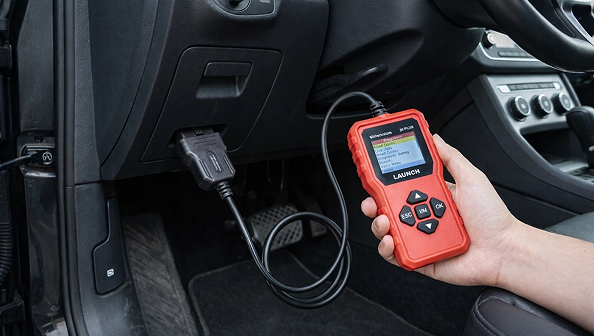
    Entry-level scan tools, often categorized under the Millennium DIY line, primarily serve the Do-It-Yourself market or basic tasks in a general repair shop. These devices are often compact and handheld. They focus on the most common diagnostic standard known as On-Board Diagnostics II.

    The Core Functionality

    The main purpose of an entry-level tool involves reading and clearing Diagnostic Trouble Codes. When a Check Engine light appears on the dashboard of a vehicle, an entry-level tool pulls the alphanumeric code. It allows the user to turn off the warning light once the repair finishes.

    Most of these tools limit access to the four main systems. These include the Engine, Transmission, ABS, and SRS. While this works for a homeowner troubleshooting a simple sensor issue, it rarely goes deep enough into the vehicle communication network. It often misses complex electrical or software-related faults.

    Portability and Simplicity

    One of the greatest advantages of the entry-level tool involves ease of use. These plug-and-play devices connect directly to the 16-pin OBD-II port. This port usually sits under the driver’s side dashboard. The tool powers up instantly. The interface stays simple. It often uses physical buttons rather than touchscreens. This design makes them durable for a home garage environment.

    Limitations of Entry-Level Tools

    While useful, entry-level tools act as read-only or limited-write devices. They show you what is wrong, but they cannot tell the car to perform a specific action. For example, if you replace a battery in a modern European car sold in the USA, the vehicle often requires Battery Registration to update the charging algorithm. An entry-level tool generally lacks the software permissions to perform this reset.

    Defining Professional Car Scan Tools

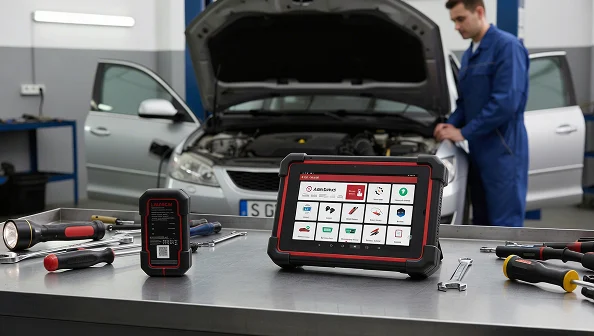
    Professional car scan tools, such as the X-431 Throttle III, Torque, and Turbo in the Launch Tech USA lineup, serve full-time technicians. These tools utilize powerful operating systems. They offer a depth of access that entry-level tools simply cannot match.

    Bi-Directional Control and Active Tests

    The most significant difference between professional and entry-level tools involves bi-directional control. While an entry-level tool only receives data from the car, a professional tool sends commands to the car.

    For instance, if a technician suspects a fuel pump failure, they use an X-431 tool to command the fuel pump to turn on or off. This allows the technician to verify the component physically without taking the car apart. This active testing defines professional diagnostics in the USA because it saves hours of manual labor.

    Coding and Programming

    Modern vehicles require software synchronization when you install new parts. If you replace a transmission control module or an injector, the car computer needs information about the new part. Professional tools offer ECU coding and, in higher-tier models, J2534 ECU programming capabilities. This allows shops to keep complex repairs in-house rather than sending customers back to the dealership.

    All-System Access and Topology Mapping

    While entry-level tools look at four systems, professional tools look at dozens. They scan over 100 modules in a single vehicle. This includes the climate control, body control module, infotainment, seat electronics, and high-tech ADAS cameras. Advanced professional tools even provide a Topology Map. This visual diagram displays the entire vehicle communication network. It shows exactly which modules talk and which stay silent.

    Comparing Software and Updates

    In the USA, automotive technology moves fast. New car models arrive every year with updated encryption and communication protocols.

    • Entry-Level Updates: The Millennium tools often come with lifetime free updates, but these updates arrive infrequently. Because the tool only handles basic data, it does not require frequent updates.
    • Professional Updates: The X-431 series requires frequent updates to maintain compatibility with the latest vehicle makes and models. These tools usually require an annual subscription after the initial period. This ensures the technician possesses the latest fix data, wiring diagrams, and software patches for 2026 models and beyond.

    Build Quality and Hardware Specifications

    The physical environment of a professional shop can be harsh. The tools drop, encounter oil, and work for eight hours a day.

    • Hardware: Professional tools function like rugged tablets. They feature large high-definition touchscreens, fast processors, and significant internal storage. They save health reports and record data streams. They also utilize Bluetooth or Wi-Fi VCI connectors. This allows the technician to walk around the car while still controlling the diagnostics.
    • Entry-Level Build: These tools usually consist of lightweight plastic. They almost always utilize a physical cable. This limits user movement and creates a point of failure if the wires pinch or bend over time.

    Data Stream and Graphing

    Understanding a fault often requires looking at Live Data. For example, watching the oxygen sensor voltage fluctuate in real time tells a technician whether an engine is running lean or rich.

    Entry-Level tools display live data, but usually only in text format and at a slow refresh rate. Professional tools support PID Graphing, where multiple data streams can be overlaid on a single graph. This allows a technician to see exactly when a sensor fails, in relation to another component. This helps diagnose intermittent problems that do not always trigger a permanent code.

    The Cost-Benefit Analysis for USA Shops

    In the USA, the labor rate for automotive repair remains high. Efficiency determines profitability. An entry-level tool might cost between $ 50 and $ 200. It is a great investment for a student or a car owner who wants to save money on routine repairs.

    A professional scan tool costs anywhere from 800 to several thousand dollars. While the price stays higher, the return on investment comes from diagnostic time. If a professional tool allows a technician to find a fault in 15 minutes that takes two hours with an entry-level tool, the device pays for itself in a matter of months. Furthermore, the ability to perform Resets allows the shop to bill for services that an entry-level tool simply cannot perform.

    Conclusion

    The primary difference between entry-level and professional car scan tools lies in the transition from simple data reading to advanced vehicle interaction. Entry-level tools work excellently for basic troubleshooting and clearing simple codes, making them perfect for DIY enthusiasts. However, professional tools provide the bi-directional control, ECU coding, and all-system access required to run a modern repair business in the USA. While entry-level tools identify the symptoms, professional tools allow technicians to interact with the vehicle’s brain to provide a complete solution.

    Experience the power of dealership-level diagnostics by exploring the professional tool lineup at Launch Tech USA.

  • Difference Between OBD2 Scanners and Professional Scan Tools

    Difference Between OBD2 Scanners and Professional Scan Tools

    Difference Between OBD2 Scanners and Professional Scan Tools

    Information is power. When a dashboard warning light flickers on, it is a signal that the vehicle’s internal network has detected an anomaly. To translate that signal into actionable repair data, you need a diagnostic tool. However, the terminology can be confusing. Are all scanners the same? Why does one cost $50 and another $3,000?

    The divide lies between the basic OBD2 scanner and the professional scan tool. While both devices plug into the same port under the dashboard, the difference in capability is vast. It is the difference between a doctor using a stethoscope to listen to your heart and a surgeon using an MRI machine to operate.

    At Launch Tech USA, we engineer solutions for both ends of this spectrum, from the user-friendly Creader series for enthusiasts to the industry-leading X-431 series for master technicians. Understanding the difference is critical to ensuring you have the right equipment for the job.

    Defining Diagnostic Tools and Their Purpose

    To understand the differences, we must first define what these tools are intended to do. At Launch Tech USA, we categorize them based on their depth of access and communication protocols.

    What is an OBD2 Scanner?

    According to Launch Tech USA  principles, a basic OBD2 (On-Board Diagnostics II) scanner is a passive reading device. It is designed primarily to communicate with the vehicle’s Engine Control Unit (ECU) regarding emission-related systems.

    Government mandates require vehicles to monitor their own emissions. An OBD2 scanner, like those found in our Creader (Code Reader) line, connects to the car to “listen” to these specific reports. It pulls generic Diagnostic Trouble Codes (DTCs) that trigger the Check Engine Light. Its primary purpose is to answer the question: “Is my car safe to drive, and will it pass a smog test?”

    What is a Professional Scan Tool?

    A Professional Scan Tool is an active diagnostic system. It is designed to communicate with all available modules in a vehicle, not just the engine, but the transmission, airbags (SRS), anti-lock brakes (ABS), body control modules (BCM), and more.

    Tools like the Launch X-431 series go beyond simply reading codes. They feature high-level software capable of two-way communication, allowing the technician to command the vehicle to perform tasks, reset maintenance intervals, and reprogram control modules. Its primary purpose is to answer the question: “How do I pinpoint the failure, verify the repair, and reset the system?”

    Core Differences in Access, Control, and Capability

    When comparing an entry-level OBD2 scanner to a professional tablet, the differences break down into four main categories: System Access, Bi-Directional Control, Data Visualization, and Advanced Coding.

    1. System Access and the Depth of Diagnosis

    The most significant limitation of a standard OBD2 scanner is that it typically only communicates with the engine. If your ABS light is on because of a bad wheel speed sensor, or your Airbag light is on due to a loose connector, a basic generic scanner will often show “No Codes Found.”

    Professional scan tools offer “Full System Diagnosis.” This means the tool can query every computer on the network. Whether it is the climate control system, the infotainment center, or the electronic parking brake, a professional tool provides a complete health report of the entire vehicle topology.

    2. Bi-Directional Control (Active Tests)

    This is the game-changer for mechanics. A basic OBD2 scanner is “read-only”; it receives data from the car. A Professional Scan Tool can talk back.

    This is known as Bi-Directional Control or Active Testing. For example, if a fuel pump is not working, a mechanic using a Launch X-431 tool can send a command to force it to turn on. If it activates, the mechanic knows the pump and wiring are functional, and the issue lies with a sensor or computer. A basic scanner cannot do this, leaving the user to guess or test wires manually.

    3. Data Streams and Graphing

    Reading a code is only the first step. To diagnose complex issues, you need to see what sensors are doing in real-time.

    • OBD2 Scanners: Typically provide “Freeze Frame” data, a snapshot of when the code was triggered. Some offer basic live data, but often just as a list of numbers.
    • Professional Scan Tools: Offer dynamic, color-coded graphing. You can overlay multiple data streams (e.g., engine RPM vs. O2 sensor voltage) to see cause-and-effect relationships. Launch Tech’s professional tablets often feature Topology Mapping, a visual tree of all vehicle modules showing health status at a glance.

    4. Resets, Coding, and Adaptations

    Modern car repair involves more than swapping parts. If you replace a battery in a BMW or a throttle body in a Ford, you must “introduce” the new part to the car’s computer.

    • OBD2 Scanners: Cannot perform these functions.
    • Professional Scan Tools: Include a suite of “Service Resets,” such as Steering Angle Sensor (SAS) calibration, Battery Registration, and Injector Coding. High-end Launch tools can even perform ECU Coding, allowing you to flash hidden features or match new modules to the vehicle’s VIN.

    Which Tool is Right for You?

    Choosing between an OBD2 scanner and a professional tool depends entirely on your role.

    The DIY Enthusiast (The Creader User)

    If you are a car owner who wants to avoid being upsold at a shop or if you do your own oil changes, an OBD2 scanner is perfect.

    • Goal: Read/Clear Check Engine lights, check smog readiness, view VIN info.
    • Recommended: The Launch Creader series. Affordable and portable, providing essential data for maintenance.

    The Professional Technician (The X-431 User)

    If you run a repair shop, a basic scanner costs you efficiency. You need a tool that can diagnose a transmission issue on a Honda in the morning and calibrate an ADAS system on a Mercedes in the afternoon.

    • Goal: Full system scans, bi-directional control, coding, and detailed reporting.
    • Recommended: The Launch X-431 series (Throttle, Turbo, or Torque). These tablets are the central hub of a workshop.

    Frequently Asked Questions (FAQs)

    Can a basic OBD2 scanner reset my Airbag (SRS) light? 

    Generally, no. Standard OBD2 protocols only cover the engine and emissions. To reset Airbag or Antilock Brake (ABS) codes, you typically need a “Plus” version of a DIY tool or a Professional Scan Tool.

    Do Professional Scan Tools work on every car? 

    Launch Tech USA professional tools are known for extensive coverage, supporting over 100 makes. New vehicles (2023+) may require tools that support newer protocols like CAN FD or DoIP, which are standard in our latest X-431 tablets.

    Why is there such a price difference? 

    You are paying for the software and R&D required to communicate with proprietary systems (like Ferrari, Ford, or GM), not just the hardware. Professional tools also feature ruggedized tablets, larger screens, and wireless VCI technology.

    Can I update my scanner? 

    Yes. Launch Tech USA provides updates for both lines. Professional tools receive frequent updates to add new car models, special functions, and bug fixes to keep pace with automotive technology.

    Conclusion

    The difference between OBD2 scanners and professional scan tools is the difference between identifying a symptom and curing the disease. While a basic scanner is an essential tool for every glovebox to monitor engine health, the professional scan tool is the lifeline of the modern repair shop, offering the deep access and control required to fix today’s complex vehicles.

    Whether you need the portability of a Creader or the unparalleled power of the X-431, Launch Tech USA has the diagnostic solution to keep you moving.

    Find the right tool for your garage at Launch Tech USA.