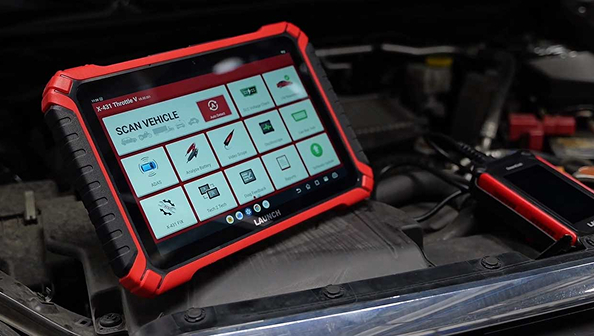
Category: News & Announcements

  • Multi-System Car Scan Tools for Workshops

    Multi-System Car Scan Tools for Workshops

    Multi-System Car Scan Tools for Workshops

    In the busy world of auto repair, wasting time is the same as losing cash. Every minute a car sits in your bay without a clear fix is a missed chance to make money. For modern shops across the USA, using a basic code reader just doesn’t work anymore. To stay ahead of the shop down the street, you need professional gear that can talk to every computer inside a vehicle.

    Multi-system car scan tools are the heart of any successful garage. They let your mechanics move past simple engine lights and look deep into the transmission, brakes, airbags, and steering systems. When you pick equipment from Launch Tech USA, you are getting a reliable partner built for the American mechanic.

    If you want the best tools for your business, take a look at the full range of professional diagnostic tools to see how they can make your daily work much faster.

    Give Your Shop The Power To Scan More Than Just Engines

    Most cheap tools only look at the engine light. But as a shop owner, you know the real profit comes from fixing the tricky stuff. Whether it is a light on the dash for the air suspension or a glitch in the traction control, a multi-system tool is your key to getting inside.

    By using a pro tool, you get to see what is happening in the transmission, the anti-lock brakes, the airbags, and the body electronics. This deep access means you never have to tell a customer to go back to the dealership for a special reset. You keep that work and that money in your own shop.

    Quick Testing To Find Broken Parts Fast

    One of the biggest drags on a shop is spending hours taking things apart just to see if they work. With the advanced features found in Launch Tech USA tools, you can skip the manual labor.

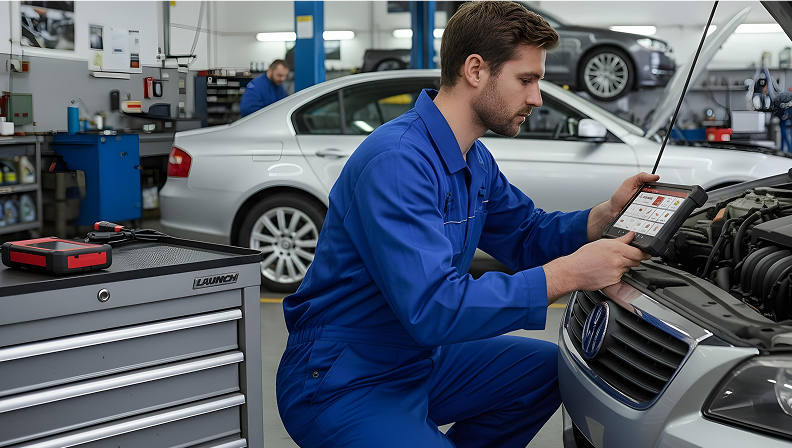
    Instead of pulling a door panel off to check a window motor, you can just tell the motor to move up or down right from your screen. You can turn on fuel pumps, click the A/C clutch, or test fuel injectors with one tap. This kind of testing turns hours of poking around into minutes of clicking buttons. It helps you work faster and keeps your shop moving.

    Huge Coverage For All The Cars On American Roads

    On any normal day, a USA workshop might see a big diesel truck, a fancy European car, and a hybrid. You cannot afford to own a tool that only works on a few brands.

    Professional multi-system tools come with massive software libraries. They work with over 100 different car brands. From the newest trucks to older cars, these tools have the software ready to go. Even on newer cars that have locked gateways, these tools help you get in and get the job done.

    Make Your Work Easier With Full Health Checks

    In a professional shop, being clear with your customers is very important. A great feature of a high-end tool is the ability to run a full health report.

    With one button, the tool scans every single computer in the car and finds every hidden fault. After the scan, you can do a few things. You can print the report or email a PDF straight to the customer. This builds a lot of trust because you can show them exactly what is wrong. It also gives you a record of the car before and after you fixed it to prove the job was done right.

    Setup New Parts Without Leaving Your Bay

    Nowadays, you can’t just bolt on a new part and expect it to work. Most parts, like steering sensors or even new batteries, need to be introduced to the car computer. This is called coding or initialization.

    Without a pro tool, a new part might stay turned off even if it is installed perfectly. Launch Tech USA tools give you the power to set up these new parts yourself. This lets your shop handle big jobs like transmission swaps or camera setups that used to be jobs only a dealer could do.

    Tough Tools That Work Without Wires

    A garage floor is a rough place for a tablet. Pro tools need to be built strongly but still run fast. The latest tablets from Launch Tech USA have thick cases and screens that won’t break easily if they get bumped or dropped.

    The best part is that they are wireless. You don’t have to be tied to the dashboard with a short cord. You can stand at the front of the car or have it up on the lift while you look at the data on your tablet from across the shop. This gives your mechanics more room to move and makes the job much less frustrating.

    Keeping Your Tools Current With Easy Updates

    Buying a scan tool is an investment, and you want it to stay useful for a long time. The car world changes fast, and new models come out every year with new computer systems.

    Since Launch Tech USA is a top brand, they put out software updates all the time to keep your tool ready for new cars. You aren’t just buying a tool for today but for the future too. In the USA, where new electric cars and high-tech trucks are everywhere, having a tool that stays updated is the only way to stay in business.

    Why Investing In Better Tools Makes You More Money

    When you look at the math, a pro multi-system tool pays for itself very quickly. You get fewer cars coming back because you found the right problem the first time. You also get to charge for more labor hours because you can do the coding and setups that other shops can’t.

    Plus, the best mechanics want to work at shops that have the best gear. Providing pro tools shows your team that you care about their success and want them to have what they need to do a great job.

    Get Your Workshop Ready For The Future

    Cars are only getting more complicated. To stay open and keep making money, your shop needs to be the smartest one in town. By picking a multi-system tool made for professional use, you are making sure your business is ready for whatever drives through the door.

    Don’t let a simple light on the dashboard stop your progress. Unlock the full potential of your garage and give your customers the best service possible.

    If you are ready to move up to a better way of working, check out our professional diagnostic tools and find the one that fits your shop best.
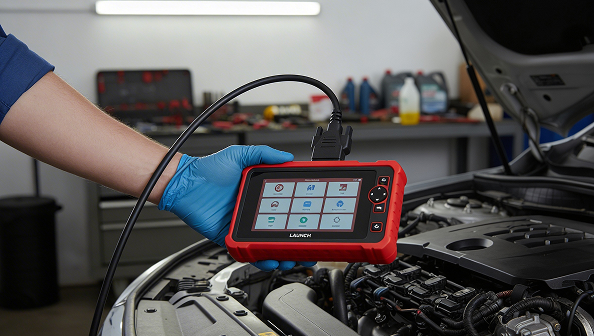
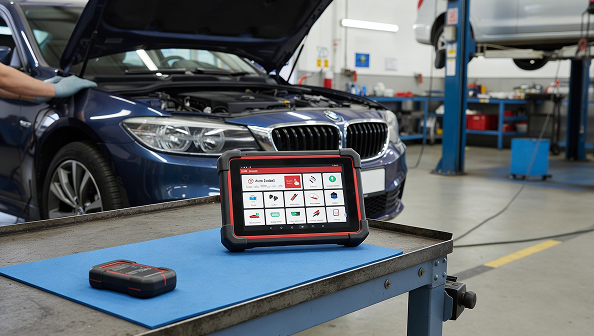
  • Diagnostic Scan Tools for Mechanics: Features That Matter

    Diagnostic Scan Tools for Mechanics: Features That Matter

    Diagnostic Scan Tools for Mechanics: Features That Matter

    Across the USA, being a mechanic means dealing with cars that are more like computers on wheels than the old-school machines we used to work on. To fix a car right these days, you cannot just rely on your gut feeling or a basic wrench. You need a way to actually talk to the vehicle’s brain. That is exactly where a professional diagnostic scan tool comes in. It is the most important piece of equipment you can have in your shop today.

    At Launch Tech USA, we build our gear for the people who spend their days under the hood. We know that if a tool is too slow or too hard to figure out, it is just getting in your way and costing you money. We focus on making professional tools that pack a ton of power but are still very easy to use. When you pick up one of our devices, you are using the best technology available to get your customers back on the road fast.

    Why Your Shop Needs a Professional Scan Tool

    It was not that long ago that you could handle most jobs with a simple code reader. But those times are gone. Today, even a basic job like putting in a new battery or changing brake pads might need a computer to tell the car that the work is done. If you do not have a high-end tool, you end up sending your customers to the dealership. That means you are handing your profits to someone else.

    By using the right equipment, you keep those jobs and that money in your own bays. These tools give you the same level of power that the big dealerships have. Whether you are working on a local truck or a high-end import, the software is ready for the job. We make sure our equipment can handle the wide mix of cars found all over the country.

    Total System Coverage You Can Count On

    The main thing a mechanic needs is coverage. A lot of cheap tools you find online only look at the engine. But a modern car has brains for everything, the transmission, the airbags, the brakes, and even the air conditioning.

    A professional tool gives you what we call OE-Level coverage. This means the tool can see every single part of the car’s computer system. When you plug in a high-quality scanner, it runs a full health report. It checks every corner of the car and tells you exactly where the problem is hiding. This saves you hours of searching and lets you start the actual repair right away.

    Bi-Directional Controls: Taking Charge of the Vehicle

    Ask any pro mechanic what their favorite feature is, and they will tell you it is bi-directional control. Most basic tools just listen to what the car says. A professional tool can actually give the car orders.

    Let’s say a car comes in because a power window will not move. You do not know if it is the switch, the motor, or a bad wire. Without a pro tool, you have to tear the whole door apart just to test it. With a professional scanner, you can just tap a button on the screen to tell the car to roll the window up or down. If it moves, you know the motor is fine, and the switch is the problem. You can do this with fuel pumps, fans, lights, and more. This is the fastest way to prove what is broken without wasting time.

    ECU Coding: Finishing the Job Right

    When you swap out a computer part on a new car, the car usually does not know how to use it right away. For example, if you install a new transmission module, the car might stay stuck in park. You have to “teach” the car’s main brain how to talk to that new part.

    This is called ECU Coding. It used to be something only a dealership could do, but we put that power in your hands. Our tools let you code and program these parts so the repair is 100% finished. This is a huge deal for shops because it lets you take on the tough jobs that other shops have to turn down.

    Simple Shortcuts for Daily Service Jobs

    Mechanics are always in a rush. You do not want to spend ten minutes clicking through menus for a two-minute job. That is why professional tools have a special section for service functions. These are quick shortcuts for the stuff you do every day:

    • Oil Resets: Turn off that maintenance light in seconds.
    • Brake Service: Safely reset the electronic parking brake so you can change the pads.
    • Battery Matching: Tell the car it has a new battery so the charging system works right.
    • Tire Pressure (TPMS): Fix those annoying dash lights after a tire rotation.
    • Diesel Cleanings: Run a DPF regeneration on trucks to keep them from clogging up.

    Having these buttons easy to find means you spend less time playing with a screen and more time fixing cars.

    Getting Ready for the Cars of Tomorrow (ADAS)

    Almost every new car sold now has cameras and radar to help the driver stay in their lane or stop for emergencies. This is called ADAS. If a car is in a fender bender, or even if you just do an alignment, these sensors have to be aimed perfectly.

    If they are off by even a tiny bit, the car could act up on the highway. We are a leader in this field. Our professional tools work with special calibration gear to make sure these safety systems are spot on. This is a high-paying service that can really help your shop grow.

    The Importance of Fast Hardware

    In a busy shop, time is your most valuable asset. If a scan tool takes three minutes to boot up and another two minutes to link with the car, that is five minutes of wasted time. Over a week, that adds up to hours of lost productivity.

    Our professional tools are built with fast processors and plenty of memory. They wake up instantly and connect to the vehicle in seconds. We also use high-capacity batteries that last through a full shift, so you aren’t tethered to a wall outlet when you need to be at the car.

    Tough Gear Made for the Shop Floor

    A diagnostic tool is a big investment, so it needs to be tough. Our units come with thick rubber cases because we know things get dropped in a shop. The screens are bright, so you can see them even when the sun is hitting your bay.

    We also hate waiting for slow tools. That is why we use fast processors and batteries that last all day. Our gear stays ready to go when you are. Plus, we use Wi-Fi for updates. You do not have to plug into a computer; just tap the screen, and you have the latest car data.

    Support and Training in the USA

    When you buy a professional tool, you are not just buying a piece of plastic. You are getting a partner. We offer great support right here in the USA. If you have a question about how to use a feature, the team is ready to help you out.

    We also provide easy-to-follow videos and guides. We want you to feel confident every time you plug into a car. Our software is designed with clear pictures and simple words, so you do not need to be a computer whiz to be a master technician.

    The Bottom Line for Your Business

    Choosing a scan tool is a big move. If you go too cheap, you will have to turn away money. If you get something too complicated, you will not want to use it.

    The professional tools from Launch Tech USA hit the sweet spot. They are powerful enough for dealership-level work but simple enough for any tech to pick up and use. Customers want fast, honest work. When you can show them a clear report on a screen, they trust you. When you fix a car in record time, they come back.

    Stop letting modern car technology slow you down. Give your shop the boost it needs. With our technology, you get the features that matter and the simplicity you need to get the job done.

  • Entry-Level vs Professional Car Scan Tools

    Entry-Level vs Professional Car Scan Tools

    Entry-Level vs Professional Car Scan Tools

    Modern vehicles in the USA are essentially rolling computers. From the Engine Control Module to the complex Advanced Driver Assistance Systems, the technology under the hood requires more than just a mechanical eye. It requires sophisticated diagnostic hardware. When you choose a device, the market generally divides into two categories. These are entry-level DIY tools and professional-grade scan tools. 

    For many automotive enthusiasts and professional technicians, the gap between these two categories matters. Choosing the wrong tool leads to missed revenue for a shop or unnecessary expenses for a hobbyist. By exploring the differences in depth, you determine which level of diagnostic power meets your specific needs.

    Understanding Entry-Level Car Scan Tools

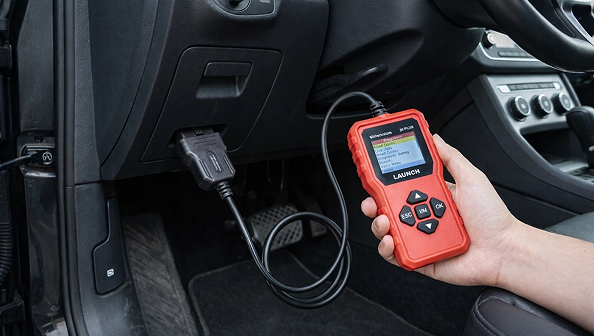
    Entry-level scan tools, often categorized under the Millennium DIY line, primarily serve the Do-It-Yourself market or basic tasks in a general repair shop. These devices are often compact and handheld. They focus on the most common diagnostic standard known as On-Board Diagnostics II.

    The Core Functionality

    The main purpose of an entry-level tool involves reading and clearing Diagnostic Trouble Codes. When a Check Engine light appears on the dashboard of a vehicle, an entry-level tool pulls the alphanumeric code. It allows the user to turn off the warning light once the repair finishes.

    Most of these tools limit access to the four main systems. These include the Engine, Transmission, ABS, and SRS. While this works for a homeowner troubleshooting a simple sensor issue, it rarely goes deep enough into the vehicle communication network. It often misses complex electrical or software-related faults.

    Portability and Simplicity

    One of the greatest advantages of the entry-level tool involves ease of use. These plug-and-play devices connect directly to the 16-pin OBD-II port. This port usually sits under the driver’s side dashboard. The tool powers up instantly. The interface stays simple. It often uses physical buttons rather than touchscreens. This design makes them durable for a home garage environment.

    Limitations of Entry-Level Tools

    While useful, entry-level tools act as read-only or limited-write devices. They show you what is wrong, but they cannot tell the car to perform a specific action. For example, if you replace a battery in a modern European car sold in the USA, the vehicle often requires Battery Registration to update the charging algorithm. An entry-level tool generally lacks the software permissions to perform this reset.

    Defining Professional Car Scan Tools

    Professional car scan tools, such as the X-431 Throttle III, Torque, and Turbo in the Launch Tech USA lineup, serve full-time technicians. These tools utilize powerful operating systems. They offer a depth of access that entry-level tools simply cannot match.

    Bi-Directional Control and Active Tests

    The most significant difference between professional and entry-level tools involves bi-directional control. While an entry-level tool only receives data from the car, a professional tool sends commands to the car.

    For instance, if a technician suspects a fuel pump failure, they use an X-431 tool to command the fuel pump to turn on or off. This allows the technician to verify the component physically without taking the car apart. This active testing defines professional diagnostics in the USA because it saves hours of manual labor.

    Coding and Programming

    Modern vehicles require software synchronization when you install new parts. If you replace a transmission control module or an injector, the car computer needs information about the new part. Professional tools offer ECU coding and, in higher-tier models, J2534 ECU programming capabilities. This allows shops to keep complex repairs in-house rather than sending customers back to the dealership.

    All-System Access and Topology Mapping

    While entry-level tools look at four systems, professional tools look at dozens. They scan over 100 modules in a single vehicle. This includes the climate control, body control module, infotainment, seat electronics, and high-tech ADAS cameras. Advanced professional tools even provide a Topology Map. This visual diagram displays the entire vehicle communication network. It shows exactly which modules talk and which stay silent.

    Comparing Software and Updates

    In the USA, automotive technology moves fast. New car models arrive every year with updated encryption and communication protocols.

    • Entry-Level Updates: The Millennium tools often come with lifetime free updates, but these updates arrive infrequently. Because the tool only handles basic data, it does not require frequent updates.
    • Professional Updates: The X-431 series requires frequent updates to maintain compatibility with the latest vehicle makes and models. These tools usually require an annual subscription after the initial period. This ensures the technician possesses the latest fix data, wiring diagrams, and software patches for 2026 models and beyond.

    Build Quality and Hardware Specifications

    The physical environment of a professional shop can be harsh. The tools drop, encounter oil, and work for eight hours a day.

    • Hardware: Professional tools function like rugged tablets. They feature large high-definition touchscreens, fast processors, and significant internal storage. They save health reports and record data streams. They also utilize Bluetooth or Wi-Fi VCI connectors. This allows the technician to walk around the car while still controlling the diagnostics.
    • Entry-Level Build: These tools usually consist of lightweight plastic. They almost always utilize a physical cable. This limits user movement and creates a point of failure if the wires pinch or bend over time.

    Data Stream and Graphing

    Understanding a fault often requires looking at Live Data. For example, watching the oxygen sensor voltage fluctuate in real time tells a technician whether an engine is running lean or rich.

    Entry-Level tools display live data, but usually only in text format and at a slow refresh rate. Professional tools support PID Graphing, where multiple data streams can be overlaid on a single graph. This allows a technician to see exactly when a sensor fails, in relation to another component. This helps diagnose intermittent problems that do not always trigger a permanent code.

    The Cost-Benefit Analysis for USA Shops

    In the USA, the labor rate for automotive repair remains high. Efficiency determines profitability. An entry-level tool might cost between $ 50 and $ 200. It is a great investment for a student or a car owner who wants to save money on routine repairs.

    A professional scan tool costs anywhere from 800 to several thousand dollars. While the price stays higher, the return on investment comes from diagnostic time. If a professional tool allows a technician to find a fault in 15 minutes that takes two hours with an entry-level tool, the device pays for itself in a matter of months. Furthermore, the ability to perform Resets allows the shop to bill for services that an entry-level tool simply cannot perform.

    Conclusion

    The primary difference between entry-level and professional car scan tools lies in the transition from simple data reading to advanced vehicle interaction. Entry-level tools work excellently for basic troubleshooting and clearing simple codes, making them perfect for DIY enthusiasts. However, professional tools provide the bi-directional control, ECU coding, and all-system access required to run a modern repair business in the USA. While entry-level tools identify the symptoms, professional tools allow technicians to interact with the vehicle’s brain to provide a complete solution.

    Experience the power of dealership-level diagnostics by exploring the professional tool lineup at Launch Tech USA.

  • Difference Between OBD2 Scanners and Professional Scan Tools

    Difference Between OBD2 Scanners and Professional Scan Tools

    Difference Between OBD2 Scanners and Professional Scan Tools

    Information is power. When a dashboard warning light flickers on, it is a signal that the vehicle’s internal network has detected an anomaly. To translate that signal into actionable repair data, you need a diagnostic tool. However, the terminology can be confusing. Are all scanners the same? Why does one cost $50 and another $3,000?

    The divide lies between the basic OBD2 scanner and the professional scan tool. While both devices plug into the same port under the dashboard, the difference in capability is vast. It is the difference between a doctor using a stethoscope to listen to your heart and a surgeon using an MRI machine to operate.

    At Launch Tech USA, we engineer solutions for both ends of this spectrum, from the user-friendly Creader series for enthusiasts to the industry-leading X-431 series for master technicians. Understanding the difference is critical to ensuring you have the right equipment for the job.

    Defining Diagnostic Tools and Their Purpose

    To understand the differences, we must first define what these tools are intended to do. At Launch Tech USA, we categorize them based on their depth of access and communication protocols.

    What is an OBD2 Scanner?

    According to Launch Tech USA  principles, a basic OBD2 (On-Board Diagnostics II) scanner is a passive reading device. It is designed primarily to communicate with the vehicle’s Engine Control Unit (ECU) regarding emission-related systems.

    Government mandates require vehicles to monitor their own emissions. An OBD2 scanner, like those found in our Creader (Code Reader) line, connects to the car to “listen” to these specific reports. It pulls generic Diagnostic Trouble Codes (DTCs) that trigger the Check Engine Light. Its primary purpose is to answer the question: “Is my car safe to drive, and will it pass a smog test?”

    What is a Professional Scan Tool?

    A Professional Scan Tool is an active diagnostic system. It is designed to communicate with all available modules in a vehicle, not just the engine, but the transmission, airbags (SRS), anti-lock brakes (ABS), body control modules (BCM), and more.

    Tools like the Launch X-431 series go beyond simply reading codes. They feature high-level software capable of two-way communication, allowing the technician to command the vehicle to perform tasks, reset maintenance intervals, and reprogram control modules. Its primary purpose is to answer the question: “How do I pinpoint the failure, verify the repair, and reset the system?”

    Core Differences in Access, Control, and Capability

    When comparing an entry-level OBD2 scanner to a professional tablet, the differences break down into four main categories: System Access, Bi-Directional Control, Data Visualization, and Advanced Coding.

    1. System Access and the Depth of Diagnosis

    The most significant limitation of a standard OBD2 scanner is that it typically only communicates with the engine. If your ABS light is on because of a bad wheel speed sensor, or your Airbag light is on due to a loose connector, a basic generic scanner will often show “No Codes Found.”

    Professional scan tools offer “Full System Diagnosis.” This means the tool can query every computer on the network. Whether it is the climate control system, the infotainment center, or the electronic parking brake, a professional tool provides a complete health report of the entire vehicle topology.

    2. Bi-Directional Control (Active Tests)

    This is the game-changer for mechanics. A basic OBD2 scanner is “read-only”; it receives data from the car. A Professional Scan Tool can talk back.

    This is known as Bi-Directional Control or Active Testing. For example, if a fuel pump is not working, a mechanic using a Launch X-431 tool can send a command to force it to turn on. If it activates, the mechanic knows the pump and wiring are functional, and the issue lies with a sensor or computer. A basic scanner cannot do this, leaving the user to guess or test wires manually.

    3. Data Streams and Graphing

    Reading a code is only the first step. To diagnose complex issues, you need to see what sensors are doing in real-time.

    • OBD2 Scanners: Typically provide “Freeze Frame” data, a snapshot of when the code was triggered. Some offer basic live data, but often just as a list of numbers.
    • Professional Scan Tools: Offer dynamic, color-coded graphing. You can overlay multiple data streams (e.g., engine RPM vs. O2 sensor voltage) to see cause-and-effect relationships. Launch Tech’s professional tablets often feature Topology Mapping, a visual tree of all vehicle modules showing health status at a glance.

    4. Resets, Coding, and Adaptations

    Modern car repair involves more than swapping parts. If you replace a battery in a BMW or a throttle body in a Ford, you must “introduce” the new part to the car’s computer.

    • OBD2 Scanners: Cannot perform these functions.
    • Professional Scan Tools: Include a suite of “Service Resets,” such as Steering Angle Sensor (SAS) calibration, Battery Registration, and Injector Coding. High-end Launch tools can even perform ECU Coding, allowing you to flash hidden features or match new modules to the vehicle’s VIN.

    Which Tool is Right for You?

    Choosing between an OBD2 scanner and a professional tool depends entirely on your role.

    The DIY Enthusiast (The Creader User)

    If you are a car owner who wants to avoid being upsold at a shop or if you do your own oil changes, an OBD2 scanner is perfect.

    • Goal: Read/Clear Check Engine lights, check smog readiness, view VIN info.
    • Recommended: The Launch Creader series. Affordable and portable, providing essential data for maintenance.

    The Professional Technician (The X-431 User)

    If you run a repair shop, a basic scanner costs you efficiency. You need a tool that can diagnose a transmission issue on a Honda in the morning and calibrate an ADAS system on a Mercedes in the afternoon.

    • Goal: Full system scans, bi-directional control, coding, and detailed reporting.
    • Recommended: The Launch X-431 series (Throttle, Turbo, or Torque). These tablets are the central hub of a workshop.

    Frequently Asked Questions (FAQs)

    Can a basic OBD2 scanner reset my Airbag (SRS) light? 

    Generally, no. Standard OBD2 protocols only cover the engine and emissions. To reset Airbag or Antilock Brake (ABS) codes, you typically need a “Plus” version of a DIY tool or a Professional Scan Tool.

    Do Professional Scan Tools work on every car? 

    Launch Tech USA professional tools are known for extensive coverage, supporting over 100 makes. New vehicles (2023+) may require tools that support newer protocols like CAN FD or DoIP, which are standard in our latest X-431 tablets.

    Why is there such a price difference? 

    You are paying for the software and R&D required to communicate with proprietary systems (like Ferrari, Ford, or GM), not just the hardware. Professional tools also feature ruggedized tablets, larger screens, and wireless VCI technology.

    Can I update my scanner? 

    Yes. Launch Tech USA provides updates for both lines. Professional tools receive frequent updates to add new car models, special functions, and bug fixes to keep pace with automotive technology.

    Conclusion

    The difference between OBD2 scanners and professional scan tools is the difference between identifying a symptom and curing the disease. While a basic scanner is an essential tool for every glovebox to monitor engine health, the professional scan tool is the lifeline of the modern repair shop, offering the deep access and control required to fix today’s complex vehicles.

    Whether you need the portability of a Creader or the unparalleled power of the X-431, Launch Tech USA has the diagnostic solution to keep you moving.

    Find the right tool for your garage at Launch Tech USA.

  • Types of Car Diagnostic Scan Tools Explained

    Types of Car Diagnostic Scan Tools Explained

    Types of Car Diagnostic Scan Tools Explained

    When your dashboard lights up with a warning symbol, it can feel like your car is speaking a different language. In the past, only dealerships had the equipment to understand these signals. Today, high-quality scan tools for vehicles allow anyone from a home hobbyist to a master technician to communicate directly with a car’s computer.

    However, not all tools are created equal. If you are looking for Launch Tech equipment, you will find a wide range of devices from small handhelds to advanced diagnostic tablets. Understanding the different types of scan tools is the first step toward faster repairs and smarter maintenance.

    In this guide, we will explain the different categories of diagnostic tools, why they are important for your garage, and how to choose the best one for your needs.

    What are car diagnostic scan tools

    A car diagnostic scan tool is an electronic device that plugs into a vehicle’s OBD-II (On-Board Diagnostics) port. This port is almost always located under the dashboard on the driver’s side. Once connected, the tool talks to the vehicle’s Electronic Control Units (ECUs), the computers that manage everything from the engine and transmission to the airbags and brakes.
    dedication as the company moves forward into its next phase of growth.

    The primary job of these types of scan tools is to pull data from the car. This data includes Diagnostic Trouble Codes (DTCs), which are the specific codes that tell you why a warning light is on. Modern tools also show live sensor readings and allow you to perform handshake procedures to let the car know you have installed a new part.

    To find the right tool for your specific needs, visit our main categories:

    • Professional Diagnostics: For shop owners and master technicians looking for the X-431 series.
    • DIY Consumer Tools: For enthusiasts and home mechanics who need the Creader series.
    • Heavy Duty Scanners: For diesel mechanics and fleet management.
    • Specialty Tools: For TPMS, Battery Testing, and ADAS calibration.


    Why having the right tool matters

    Choosing the right diagnostic tool is about more than just reading a code; it is about having the right level of access to the vehicle’s brain. Here is why the distinction matters:

    • Cost Savings: Using the right tool helps you find the exact part that is failing. This prevents the parts cannon approach, where you keep buying and replacing things, hoping the light goes away.
    • Deep System Access: Basic tools only see the engine. Advanced types of scan tools can access the ABS, Airbags, and Transmission, which are critical for safety.
    • Future Proofing: Modern cars (especially those made after 2020) use new communication languages like CAN FD and DoIP. If your tool does not support these, it will not be able to talk to newer vehicles.
    • Time Efficiency: For a professional shop, a fast scanner like the Launch X-431 Throttle V can perform a Health Report on all systems in seconds, allowing you to bill more hours and fix more cars.

    Common use cases for diagnostic equipment

    Different situations require different levels of diagnostic power. Here is how you might use various tools in the real world:

    • The Pre-Purchase Inspection: If you are buying a used car, a portable DIY tool allows you to check if the seller recently cleared any major engine codes to hide a problem.
    • Brake Maintenance: Many modern cars use electronic parking brakes. You cannot simply push the brake piston back by hand; you need a scan tool to retract the electronic motor so you can change the pads.
    • Battery Registration: When you put a new battery in a BMW or Audi, the car needs to be told that a new battery is present so it can adjust the charging rate. This requires a tool with Maintenance Reset functions.
    • Advanced Troubleshooting: If a car’s air conditioning is not working, a professional-grade tool can perform a Bi-Directional Test to command the A/C compressor to turn on. If it turns on, you know the part is good, and the problem is likely a sensor or a wire.

    Comparing the four main types of scan tools

    At Launch Tech USA, we categorize our tools to fit the specific needs of our users. Here is a comparison of the four main types you will find in the industry:

    Basic Code Readers

    These are the most entry-level types of scan tools. They are usually simple, corded devices with a small screen.

    • Main Goal: To read and clear the Check Engine light.
    • Who it is for: Drivers who want to know if their car is safe to drive to a shop.
    • Limitations: They usually cannot see the Airbag (SRS) or Brake (ABS) data.

    DIY and Enthusiast Tools

    The Creader line from Launch Tech USA is designed for the serious home mechanic. These tools offer a balance of price and performance.

    • Main Goal: Full system scanning and basic maintenance resets.
    • Capabilities: These can often read ABS and SRS codes and perform common tasks like oil light resets or steering angle calibrations.
    • Hardware: Often handheld with a color screen or a Bluetooth dongle that works with your phone.

    Professional Diagnostic Tablets

    These are the workhorses of the automotive industry. Tools like the Launch X-431 Throttle V or Torque Link are high-speed tablets built for daily shop use.

    • Main Goal: Full vehicle diagnostics, coding, and bi-directional control.
    • Capabilities: They support the latest protocols (CAN FD/DoIP), allow for ECU coding (teaching the car new parts), and provide access to Secure Gateways for brands like FCA (Jeep/Dodge/Chrysler).
    • Hardware: Ruggedized tablets with long battery life and wireless VCI (the part that plugs into the car).

    Heavy Duty and Specialty Tools

    Standard cars use a 12V system, but semi-trucks and heavy machinery use 24V systems. These specific types of scan tools are built with different hardware to handle the higher voltage and different communication protocols used in the trucking industry.
    Example: The X-431 Torque AutoHD Pro can handle both passenger cars and heavy-duty trucks in one device.

    Frequently asked questions about scanners

    What is the difference between an OBD2 scanner and a Scan Tool?

    An OBD2 scanner is a general term often used for basic code readers. A Scan Tool usually refers to a more advanced device that can look at live data, perform resets, and talk to systems beyond just the engine.

    Will a Launch Tech tool work on my specific car?

    Launch Tech is famous for having some of the widest vehicle coverage in the world. Our professional tools support over 100 different car brands, including domestic, Asian, and European models.

    Do these tools need Wi-Fi to work?

    You do not need Wi-Fi to scan a car, but you do need it to download software updates or use Online Coding features. Most professional Launch tools have built-in Wi-Fi for easy one-click updates.

    Can I use a professional scanner if I am not a mechanic?

    Yes. While the software is very powerful, Launch Tech USA designs its interface to be intuitive. If you can use an Android tablet, you can use a Launch scan tool.

    Conclusion

    Understanding the different types of scan tools is essential for anyone looking to maintain or repair modern vehicles. Whether you need a simple Creader for home oil changes or an X-431 tablet for a high-volume repair shop, choosing the right level of technology ensures you can diagnose problems accurately and safely.

    Find the most reliable diagnostic equipment for your workshop at Launch Tech USA.

  • TPMS Tech Bulletin: 2024 BMW X5- LTR sensor

    TPMS Tech Bulletin: 2024 BMW X5- LTR sensor

    TPMS Tech Bulletin: 2024 BMW X5- LTR sensor

    TPMS System Overview

    The 2024 BMW X5 uses a direct TPMS system with Phase Angle Location (PAL) technology. This advanced auto-relearn feature uses data from the wheel speed sensors (part of the Anti-lock Braking System) in conjunction with the individual tire sensors to automatically and accurately identify the position of each sensor on the vehicle. This provides the driver with a precise location of a low-pressure tire on the iDrive display. The OEM sensors in the 2024 BMW X5 operate on a frequency of 433 MHz. The system will automatically detect and learn the sensor location when a new sensor is installed or after a tire rotation, eliminating the need for a manual relearn procedure.

    LTR TPMS Solution

    LTR TPMS sensors provide a validated solution for servicing the TPMS system on the 2024 BMW X5. These universal sensors offer flexibility by allowing programming both on and off the vehicle.

    Sensor Programming Methods:

    • Create New Unique ID: Program the sensor with a brand-new, unique identification number.
    • Copy Existing TPMS ID: Clone the sensor by copying the ID from the existing sensor stored in the vehicle’s memory.
    • Manual ID Entry: Manually input a new ID into the sensor.
    • Batch Programming: Program up to four sensors simultaneously for efficiency.

    Manual Relearn (w/i DRIVE):

    1. After confirming the replaced TPMS sensors are properly installed, adjust tire pressures to the placard value.
    2. Activate each TPMS sensor installed with a TPMS tool.
    3. Turn ignition to ON.
    4. Use iDrive menu to select “SETTINGS” a. Select “CAR/TIRES” b. Select “CONFIRM TIRE PRESSURE”
    5. Drive for up to 10 minutes.

    For More Information:

    For additional technical assistance or sales inquiries regarding LTR TPMS, please contact Launch Tech USA.

    • Phone: 1-877-528-6249
    • Email: support@launchtechusa.com or sales@launchtechusa.com
    • Website: https://www.launchtechusa.com/tpms

  • Launch Tech re-releases TSAP2 Tool

    Launch Tech re-releases TSAP2 Tool

    Launch Tech releases TSAP2 Tool, latest TPMS diagnostic solution

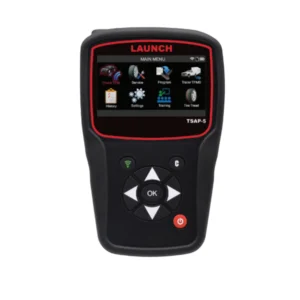
    Launch Tech USA announced the re-launch of its new Tire Pressure Monitoring System (TPMS) tool, the TSAP2. This tool is designed for technicians of all skill levels, creating a universal solution for all domestic and import vehicles. 

    The TSAP2 aims to streamline and simplify TPMS service, offering an intuitive platform with over 10 different TPMS functions. With this tool, technicians can perform diagnostics on most aftermarket sensor brands. The tool is constantly updating, keeping techs equipped with the most up-to-date vehicle coverage. It provides step-by-step relearning information, guiding technicians through even the most complex procedures. 

    Designed to be paired with the Launch LTR TPMS sensors, this pairing provides technicians with a single-source TPMS solution. 

    Key features of the TSAP2 include:

    • Over 10 TPMS functions
    • Diagnoses TPMS sensors on both domestic and import vehicles
    • Ensures technicians have latest vehicle coverage with real-time updates
    • Programs most aftermarket sensor brands
    • Paired with Launch LTR TPMS sensors for complete solution

    A word from Launch Tech USA

    “As the aftermarket TPMS segment continues to grow, technicians need a reliable, feature-rich tool that can keep pace with evolving vehicle technology,” said Eri Muca, TPMS Director at Launch Tech USA. “The TSAP2 is that solution. It’s a universal platform that combines powerful diagnostic capabilities with a user-friendly interface, giving technicians the confidence to service any TPMS job that comes into the shop.”

    Launch Tech USA in the news

    Launch Tech USA announces PredictaFix integration for AI-driven diagnostics

    The new feature offers users guidance by using CarTechIQ’s MechanicIQ platform for faster, more efficient repairs.

    Video: Launch Tech USA Tread Master

    In this video, Launch Tech USA demonstrates the Tread Master.

    How to Diagnose Catalyst Efficiency Codes P0420 & P0430 with Confidence

    Learn how the Launch Tech Throttle V simplifies diagnosing catalyst efficiency codes P0420 and P0430.

    More from Launch Tech USA

    The X-431 Throttle V from Launch Tech USA is designed to deliver a combination of automotive intelligence, quick navigation, and ergonomic handling for optimal efficiency.

    The Launch Tech USA Tread Master is a tire tread depth examiner that offers quick and accurate tire wear analysis regardless of chassis height.

    The Launch Tech X-613 Portable 3D Wheel Aligner is a wireless 3D wheel aligner designed with a streamlined industrial structure.